Showing posts with label herbs. Show all posts

Thursday, February 7, 2019

Seaside Herb Society Faire Saturday March 30th in Ormond Beach


The annual Seaside Herb Society Faire will be held Saturday March 30th from 9:00 a.m. to 2 p.m. at the regular location at the Bailey Riverbridge Gardens, 1 North Beach Street, Ormond Beach. We will be bringing our most popular Aquarian Bath soaps and shampoo bars, and any other items upon request. I have also heard that Meg from Herb and Spice Scentsations will return to the faire with her wonderful spice blends, which I'm looking forward to restocking. Mark your calendars and hope to see you there next month. 

Short list of Aquarian Bath items to be available at the fair:
Unscented and Lavender Scented Eye Pillows
Gardener's Scrubby Soaps
Patchouli Soaps
Lavender Oatmeal Soaps
Lavender Patchouli soaps
Hemp oil soaps
Lavender Spearmint Salt Soaps
Vanilla Chai Soaps
"I heart MOM" Mother's Day soaps
Carrot shampoo bars
Neem Shampoo Bars
Lemon Vanilla Shampoo Bars
Microwavable Herbal Neck Pillows
Solid Perfumes
Lip Balms

Friday, April 10, 2015

Seaside Herb Society Fair Saturday April 11th in Ormond Beach


Seaside Herb Society 
20th Annual Faire

Come and celebrate everything herbs!  

There will be speakers, herb plants, baked goods, soaps, and more!
Saturday, April 11, 2015 - 9 a.m. to 2 p.m.
Bailey Riverbridge Meeting House
1 North Beach Street,
 Ormond Beach, FL 

Directions: Travel east on SR40/Granada Boulevard to the Granada Bridge in Ormond Beach, turn left onto Beach Street. Bailey Riverbridge Meeting House will be on your immediate right. 


Saturday, November 8, 2014

DIY: Can you can you "refresh" the scent of a flaxseed pillow with essential oils?


We received a good question about out scented flax pillows the other day.  I'm posting it here so others can benefit from the answer.

How long does the scent last and can you "refresh" the flax with oils? I am an essential oil rep. and have a ton of oils and would like to be able to use different oils at different times. Is this possible?


The length of time that the scented herbs lasts really depends on how often you microwave it. I have pillows from over a year ago that still smell good when I heat them.


If you want you use essential oils, it is better to put just a drop or two on the pillow in a spot where you will be careful that it will not directly contact the skin after heating the pillow. You don't want to get undiluted essential oil on your skin, because it can make an allergic reaction and sensitize you to the essential oil. For that reason it would be the safest using one of our flax pillows that have washable covers, so that you could add a drop or two (no more than 2 drops) of oil to the inner pillow, and then insert the pillow into the protective cover. If the essential oil is pure, then it will not leave a residue on the pillow. You should test the purity of your essential oil first by putting a drop on plain paper. When a pure essential oil oil evaporates there will be no residue. This takes 24 hours or less depending on the oil. Fragrance oils are not beneficial for aromatherapy, and would also stain the fabric. 


Organic Cotton and Hemp Flax Pillow with washable cover.
A better way to refresh the pillow is to cut open the end seam, pour the contents into a bowl, and add a cup and a half of good quality dried Organic herbs. Mix them up and then set them aside until you have washed and dried your pillow sleeve. Then refill the sleeve using a funnel and then stitch down the end seam. You can use a mending kit if you don't have a sewing machine.

Wednesday, February 26, 2014

18th Annual Seaside Herb Society Fair in Ormond Beach

Holy Basil in bloom

The Seaside Herb Society 18th Annual Herb Faire is scheduled for March 22, 2014 from 9 AM to 2 PM at the Bailey Riverbridge in Ormond Beach.  The address is 1 North Beach Street Ormond Beach, FL 32174.  


We always stock up on herb plants at this event.  Last year the ladies brought in Olive trees for sale at the event.  The herbal breakfast items are always a special treat.  

Aquarian Bath will be vending as usual.  We will be bringing member's favorite products: Carrot top shampoo bar, Crouching Tiger Hidden Dragon Balm, Flaxseed herbal pillows, Patchouli soaps and more.  Please be sure to leave a comment here if you plan to attend and would like me to bring particular items.  We usually just bring a small fraction of our complete inventory for this event.


Saturday, February 2, 2013

Herbal First Aid with 7Song featuring Yarrow


Learning Herbs has another great online course starting.  Herbalist 7Song teaches about herbal first aid starting with Yarrow.  With over 30 years experience, 7Song, director of the Northeast School of Botanical Medicine, is one of the country’s most respected herbal first aid experts.  After taking this course you will have confidence for dealing with acute situations.  You can watch the first part of the course for free.  Free videos this week include how make an activated charcoal poultice, an amazing natural wound treatment, and also includes an in depth look at 7Song's favorite herb for first aid.  

Thursday, October 4, 2012

Preserving Culinary Herbs in Salt


Preserving culinary herbs in salt is a great way to have fresh tasting herbs year round.  It is especially a good method for preserving herbs that reach their peak during a hot and humid time of year.  I have very poor luck trying to dry herbs during the warmer months.  I recently harvested all of my French Tarragon at it's peak.  It was simple to save it.  I just loosely packed a clean glass jar full of fresh picked Tarragon and added fine sea salt.  The salt dehydrates while leaving their flavors intact.  When I saw this photo of basil preserved on pinterest, I had to share it.

Do you preserve herbs in salt?  If so which are your favorites?

Saturday, September 15, 2012

New Microwave Flaxseed Neck Pillows with Organic Herbs

I recently tripled my inventory of flaxseed microwavable neck pillows.  In addition to many new fabrics, I also made a new herbal blends.  So now there are 3 types of pillows available: 1) Plain Organic Flax seed, 2) Organic Lavender and Flax seed and 3) Organic Spearmint, Lavender, Chamomile and Flaxseed.  The blend with Spearmint is really wonderful hot for sinus congestion.  I used it almost exclusively recently when I caught a little sinus cold from the kids.  In order to make it easy to shop by type of pillow I added these 3 categories to the neck wraps  section of Aquarian Bath.  You can use them for heat therapy or cold therapy.  I store mine in the freezer and use them for bumps and bruises or to cool down.  These make wonderful holiday gifts.


Wednesday, July 11, 2012

Perilla - A Garden Favorite for Tummy Trouble

A photo of Perilla that I took at Bastyr University in Seattle. 

Perilla is one herb that I always have growing in the garden.  It is simple to grow from seed and once it gets started is self sows easily.  It doesn't need any special attention.  The scientific name is Perilla frutesces, but other names include Beef Steak Plant and Shiso.  The Chinese name for the plant is Zi Su, or purple fish-smell.  It does have an odd smell and mild pungent flavor.  Different parts of the plant are used in Chinese Medicine, the leaves Zi Su Ye, the seeds Zi Su Zi and the stems Zi Su Geng.  It is used traditionally to relieve nausea and vomiting, for morning sickess, and seafood poisoning.  I use the leaves exclusively.  

Perilla leaf up close under the microscope.

The first time I used fresh perilla leaf was when my daughter Moira was a baby or toddler.    I forget exactly how old she was, but she had been vomiting.  It is so sad to see little kids sick like that when they are so young.  What I did was just take a new leaf of Perilla and chew it up a bit first and then give it to her.  It really cleared up the vomiting right away.  I know that there was at least one other occasion to use it.  The perilla is very safe for pregnant women with vomiting also.  I have also tinctured perilla to have on hand to use in the winter when no fresh herb is available.  

Here we were on a day when she was feeling her normal happy self.  This picture is from our old house on Palmetto Ave in Daytona.


It had been a while since I had needed to use any Perilla, but this week Tessa had an upset stomach too.  She threw up before bed, then again in the morning.  I was so glad that I have always let this 'weed' go to seed.  Tessa is an avid gardener and always happy to try new vegetables or edible weeds in the garden.  She even likes tasting my herbal tinctures by the drop.   Her she is watering my Rosemary bush that she likes to take little bites of.

Tessa watering the plants.

But after being so sick and throwing up, Tessa was not her usual self.  She was scared to try a new leaf or a new tincture.  Luckily for me I was able to reason with her.  She is such a smart little girl.  I told her that when her sister Moira was a baby, I gave her the Perilla leaf to eat when she was sick and it made her feel better.  Tessa looked at me very seriously and took 3 very small bite of a quarter-sized new Perilla leaf.  After that there was no more vomiting, so I was very happy.  I put 3-5 drops of tincture in her milk the rest of the day just to be cautious.

Perilla is such a common herb.  I found seeds easily for my Perilla on a Garden Swap Forum.


Thursday, June 7, 2012

The Herb Companion Guest Post: 3 Annual Herbs for Stress Relief


I recently wrote an article for The Herb Companion's blog entitled "3 Annual Herbs for Stress Relief." I'm honored they filed it under "Sage Advice." The article details how to grow and use Holy Basil, Motherwort, and Skullcap for reducing tension and stress. I hope you enjoy it. Kristie from Spirit Horse herbals pointed out that Skullcap and Motherwort are perennials in Northern Climates, however I find they have to be grown as annuals in our climate. For more information growing herbs in hot climates I suggest Monica Brandies book Herbs and Spices for Florida Gardens.

"We all seek more peace and tranquility in life. Growing a few herbs is a fabulous way to help with relaxation and stress reduction. Plus, planting herbs is a fun activity. Learn how to select herbs that will actually help you relax!

To make sure it is a stress-free experience, each herb has unique properties that also make them useful for relieving stress and anxiety. I have chosen three herbs that I find easy to grow, and they are holy basil, motherwort and skullcap.... read more"

Wednesday, April 25, 2012

Spring Time in the Garden

April is a wonderful month in Central Florida- warm, but not too hot. It was a great day to take some photos in the garden with my new camera. It's a HP Photosmart R827 and I am pretty happy with the close up flower shots.

This is a "vick's" plant from Maggie's Herb Farm in St. Augustine. It can be used in a steam for sinus congestion, but I like it best as a low maintenance house plant.


Lavender is not so easy to grow in Central Florida. I was lucky to get a cutting from a friend who had a good variety for our climate. I have also had success propagating it by making cuttings at the end of the summer.


This is an heirloom variety of lettuce that is starting to flower. The lettuce was delicious. Seeds were a swap from garden blogger Ink and Penstemon.


These are cucumber flowers in my garden. This is the first year I've tried growing them.


First year of fruit on my Blue Berry bushes! Yay!

Friday, January 13, 2012

New Herbal Energetics Course at Learning Herbs with Kiva Rose

"What if you could use your senses to learn the healing properties of plants? Herbalist Kiva Rose will be teaching an Online Herbal Energetics Class starting at the end of January. Check out this link at Learning Herbs for a sneak preview and for more info.

Kiva is an herbalist in New Mexico who hosts the Traditions in Western Herbalism conference.

Monday, December 26, 2011

New Garden Video

In order to show off my pumpkin patch I made this little youtube video. I'm really not a video expert. It was the first time I made a public youtube video, so my notes were a little off. I was getting used to the editor. I hope you like it though. You will be able to get an idea about how I am growing the herbs and pumpkins that I use in my products including Holy Basil and Calendula. I wasn't able to point out every herb, maybe next time.

Wednesday, June 1, 2011

Visit My New Store and Blog at AquarianBath.com

This is a quick blog post to let you know that I have a brand new online store at http://aquarianbath.com. There are a lot of cool features at the store including an integrated blog, a pick up option for Daytona Beach locals, and an affiliate program. My next step will be to transfer RSS and email subscribers from this blog to the new blog (fingers crossed to figure out that next step). If you have subscribed to this blog by google connect and would like to keep up to date, you can visit the new blog and subscribe by RSS.

Tuesday, April 12, 2011

Ancient Healing Turmeric Recipe and Culinary Herbalism Course with K.P. Khalsa

I was just reading an article in Herb Companion tonight about Turmeric and was thinking to myself that I need to use this herb more often. This plant is similar to ginger, and I have grown it here in the past. So I was excited to receive an email tonight from John Gallager from LearningHerbs.com with this cool recipe that Rosalee de la Forêt learned from herbalist K.P. Khalsa. I'm happy to be able to share it with you.

Golden Milk: An Ancient & Healing Remedy

by Rosalee de la Forêt

Turmeric has been used for thousands of years for countless ailments. In recent years it has also caught the attention of western researchers and there are many studies touting its many benefits.

Some benefits include...

  • Digestion and the liver (Ulcers, diverticulitis, flatulence, leaky gut)
  • Heart heath (High blood pressure, unhealthy cholesterol)
  • Immune support (Cancer, colds and flu, bronchitis)
  • Musculoskeletal strength and flexibility (Joint disorders, arthritis, pain)
  • Nervous system (Pain, Alzheimer's)
  • Wound healing and healthy skin (Eczema, psoriasis)
  • Diabetes and Menstruation difficulties

Turmeric is pretty astonishing!

I learned this basic recipe from Karta Purkh Singh Khalsa and I often suggest it to my clients with a lot of success.

K.P. Khalsa has a new course coming out this week called Culinary Herbalism.

This recipe is in two parts. First we make the paste and then we’ll explore how to use it.

To make the turmeric paste you’ll need:

  • 1/4 cup of turmeric powder
  • 1/2 teaspoon of ground pepper
  • 1/2 cup of water

Measure out the ingredients. The additional pepper makes the turmeric more bioavailable, meaning that you use less for better results. At these measurements the pepper is about 3% of the mixture.

Next add the powders and the water to a small sauce pan and mix well. Turn the heat to medium high and stir constantly until the mixture is a thick paste. This won’t take long!

Let this mixture cool and then keep it in a small jar in the fridge.

Now we’ll look at a variety of ways to use this mixture.

Golden Milk

To make Golden Milk you’ll need...
  • 1 cup of milk (or milk substitute if you don’t consume dairy)
  • 1 teaspoon almond oil, ghee or olive oil
  • 1/4 teaspoon or more of turmeric paste
  • honey to taste

Combine all the ingredients (except honey) in a saucepan and while stirring constantly heat the mixture until just before it boils.

Add honey to taste.

Other suggestions... this could be made into a smoothie. When blended it creates a beautifully foamy drink. Fruit could be added. Cinnamon can be sprinkled on top, etc. Experiment and enjoy!

Other options for turmeric paste

  • Add a small dollop of the paste on top of crackers and cheese.
  • Spread the paste on sandwich bread and continue with sandwich ingredients.

The best way to get our medicine is in our food.

Please check out this new course with K.P. Khalsa ALL ABOUT Culinary Herbalism. There is a video on making this recipe in the Culinary Herbalism Course.

Sunday, January 23, 2011

Microscopic Fairy Fun: Violet, Lemon Balm, Lemon Verbena and Rosemary


I stayed up way to late last night playing with images from Moira's new digital microscope. It was a really great gift for only $20. I'm pretty sure this is the same unit. The photo above is of a violet leaf from my garden out front. I couldn't resist adding some fairy clip art from WebStarWest.

Lemon Balm (Melissa officionale) is pictured below. Don't you love the tiny prickly hairs? I had to add the mom and baby fairy, since Lemon Balm is such a wonderful herb for kids. I used a tincture of it that I made recently for Tessa when she had a stuffy nose.


The Lemon Verberena Fairy is my favorite from the collection. I made this image first. Such a beautiful green, and the scent could really make you want to dance.


A pensive Rosemary Fairy. I love being able to feel AND see just makes the tender tips of the Rosemary Leaves so stickly. I took the leaves from my potted Rosemary Christmas tree. This is another herb I've been using a lot this winter. This is an herb that I use all the time in oil based infusions. It mades a great base for a pain relief salve or a congested chest rub.


I have many more plant pictures to share, but I thought I would start out with these fun ones.

Wednesday, December 1, 2010

Great Herbal Game For Kids In Sale Today and Tomorrow


If you have a love for herbs that you would like to share with children here is one way to do it. Check out the Wildcraft! board game from Learning Herbs. This is my daughter's favorite board game. She has been playing it since she was 4 years old. It is a cooperative game in which everyone wins. The players go on an adventure and have to wild harvest herbs to help cure various troubles along the way. This game is a great deal anytime, but it is on sale for 50% off the next 2 days. Check it out when you have a chance for your favorite junior herbalist.

Wednesday, November 10, 2010

Herbal Events in Central Florida this Sunday November 14th

This Sunday is a great day for herb lovers in Central Florida. I have two events to share with you whether you are in the Daytona Beach or St. Augustine area.

The first is my Salves and Balm making class at Maggie's Herb farm in St. Augustine. From 10-2 I will be teaching how to make a black drawing salve like the one pictured below from my Etsy shop. I have called the farm to confirm also that their lovely pink rose bush is in full bloom and ready for us to make a beautiful salve with. I will also be demonstrating how I make lip balms with essential oils of Sweet orange and Peppermint. There are still 6 spots available in this class so round up your friends if you would like to get in on this herbal adventure. The fee is $35 and you can call the farm to register. 904 829 0722.


The other great event that is happening on Sunday is the "A rose by any other name" fundraiser for the new Rose and Herb Garden in down town Daytona Beach. The event will be held at the corner of Orange Ave and Beach Street. My friend Ciana from Green Halloween Daytona is organzing this event. She and I had too much fun organizing and preparing for Green Halloween that we got our wires crossed and we doubled booked me for a workshop at the garden on Sunday as well. Hallogreen was great fun by the way. Here is Moira with Rae Rae, the enviropal.


Back to the Rose Garden: you are all extra lucky, because of the mix up I recruited Ralph from Deep Woods Herbal Research Inc in Daytona to come out in my place and give an herbal talk for my slot at 2 pm about herbs for cold & flu season. Ralph is a very knowlegable herbalist who learned from his father who was an herbalist as well. The fee for this workshop is only $5, it's a great deal. Or come earlier at 12 and for $5 you can also learn about quality Rose Gardening with expert Dana Venrick.

Tuesday, October 19, 2010

Earth Apple: The Bittersweet Medicine of Chamomile by Kiva Rose


The following article is by herbalist Kiva Rose, a well-known herbal blogger, and co-founder of the Traditions in Western Herbalism Conference. She is someone who I have known and traded with for a few years now.

Kiva's plant monographs, like the one below, are famous for their deep exploration into herbs that you will not find in other places.

Kiva is now offering a plant energetics course. Here is a sneak preview below for chamomile. You can learn more about her upcoming correspondence class here: Herb Energetics with Kiva Rose


Earth Apple: The Bittersweet Medicine of Chamomile

By Kiva Rose

I am excited to finally be able to go deeper into explaining herbal energetics in my upcoming course, Herb Energetics with Kiva Rose

Let’s begin with an herb we all know and love, chamomile.

However, do you REALLY know Chamomile?

Chamomile means “earth apple” which is easy to understand when we accidentally trample the flowers and underfoot and suddenly smell the welcome fragrance of apples rising from the earth. In the same way, Spanish speaking peoples often use the name Manzanilla, literally meaning “little apple”.

Even for those largely unfamiliar with herbs, the distinctive sweet scent of Chamomile is often both familiar and comforting. This plant is many people’s first and perhaps only introduction to herbalism, often from a cup of honey-sweetened and belly-calming tea from their grandmother.

Many children enjoy eating the buds or just opened flowers, savoring the sweet aromatic taste of the plant, and rarely seeming to mind the slightly bitter aftertaste. Some patches of Chamomile, depending on phase of flowering and availability of moisture, are much more bitter than others but the fragrant sweetness persists even in the most bitter batches.

Far from irrelevant, these signature sensory characteristics of Chamomile that make the plant memorable in our minds are also the primary keys to understanding how to work with Matricaria as a medicine.

As with almost any herb, the taste and scent of Matricaria tells us a great deal about its properties, allowing us to use our senses to listen to the plant and understand its essence as a medicine. That blissfully apple-like scent that children so love to breathe in from the flowers tends to bring relaxed smiles to their faces and anyone who’s ever drank a cup of the tea can testify to the relaxing, tension alleviating effects of the plant.


That aromatic component, stemming from the plant’s high volatile oil content, is predictably nervine, meaning that it has a discernible effect on the nervous system. In this case, a specific relaxing, calming effect. Additionally, that same volatile oil content is responsible for Chamomile’s actions as a carminative, relieving digestive stagnation in the form of gas, gut cramping and mild constipation. A traditional remedy by several North American indigenous tribes for the uterine cramps of girls just beginning their menstrual cycles, Chamomile is a mild relaxant for the smooth muscles of the gut, uterus, bladder and respiratory tract with a specific affinity for the gut.

Matricaria is not just aromatic, even in the sweetest Chamomile flowers we find a notably bitter aftertaste. Rather than ruining the flavor of an otherwise tasty herb, that bitter element enhances and expands the medicinal properties of the plant. The bitter flavor tells us that it has a distinct effect on the digestive system, even beyond the aromatic/carminative qualities.

The bitterness increases the secretion of digestive juices and enzymes in the gut, thereby improving digestion wherever there is a lack of secretions, which is a common cause of heartburn and many cases of general gut discomfort. This combined with its obvious nervine properties; Matricaria excels at treating what is commonly known as a “nervous stomach”, which generally implies digestive upset concurrent with anxiety and nervous tension.

Volatile oils and bitter principles together make for a powerful ability to reduce inflammation and promote healing, especially in the gut. I rarely create a formula for those with leaky gut, irritable bowel syndrome or even Crohn’s disease that doesn’t contain some proportion of Chamomile. Even as a simple, this pleasant tasting plant can very effectively reduce gut inflammation, pain and cramping while promoting healing of the mucosa and improving overall digestion. And of course, reducing any anxiety that may be aggravating or triggering the gut issues in the first place.

Just as it soothes and heals internally, Matricaria is also a first-rate external application for almost any case of inflammation, irritation, swelling and even potential infection. It finds its way into many of my compress formulas for eczema, psoriasis, atopic dermatitis and other common inflammatory skin conditions.

Steams, baths and infused oil are other effective ways of utilizing the calming, decongestive and healing properties of the herb. It’s also the first plant I think of in addressing the discomfort, irritability, insomnia, belly upset and fever of teething in small children.

Chamomile is one of my favorite remedies for all sorts of eye inflammations and infections. It can be used as a warm compress or saline eyewash to reduce inflammation, possible infection and pain in the treatment of styes, conjunctivitis, pink eye and similar maladies.

It teams up especially well with any Rosa spp. petals where there is a great deal of redness, irritation and swelling in the eye and the surrounding area. Just be sure to strain all those tiny (and potentially irritating) bits of Chamomile flower before using as an eyewash.

Chamomile has a well-deserved reputation as an archetypal remedy for children (or as Matthew Wood says “children of any age”), especially where there is fussiness, restlessness, frequent digestive upset and a tendency to react strongly to any irritant or discomfort. If one were to read the first dozen monograph on Matricaria they came across, the word “soothing” would be likely to show up in nearly every one. While now a somewhat clichéd representation of this common herb, it is nonetheless very accurate.

There’s a tendency by some of us to be less interested in the classic gentle herbs whose effects seem obvious, mild and less than profound. And yet, Chamomile has retained it’s popularity and reputation over the years for a very a specific reason. It works. It’s an effective, widely applicable, safe medicine well-loved by countless generations of mothers, herbalists and more recently, even medical doctors. This small but fragrant apple of the earth remains an invaluable medicine for all of us. Through both sweet and the bitter tastes, Chamomile provides us with a simple yet essential remedy.

Considerations: People with sensitivities to plants in the Aster family may have similar problems with Matricaria. Also note that Pineapple Weed (M. discoidea) often has a stronger bitter component and overall action than the common garden grown M. recutita.

The low down…

Common Name: Chamomile, Manzanilla, Pineapple Weed
Botanical Name: Matricaria recutita (as well as M. discoidea)
Botanical Family: Asteraceae

Taste: Aromatic, sweet, bitter

Vital Actions: relaxant nervine, relaxant diaphoretic, aromatic bitter/carminative, vulnerary,

Specific Indications: Irritability, tension, heat, hypersensitivity to pain

Energetics: sl. Cool, dry


So, exactly how does Kiva learn about plants by using her senses?

Just click here Herb Energetics with Kiva Rose

Wednesday, August 11, 2010

Favorite Equipment for the Herbal Kitchen?

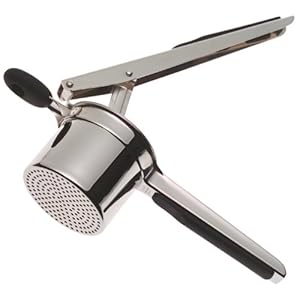
I recently broke my favorite pot for making herbal balms and salves. It was an awesome Corningware pot with cup and oz markings on the inside. This was so great for making syrups when you need to boil down the solution to half the initial volume. So I'm in the market for new equipment. I haven't been able to find something exactly like what I broke, so I'm shopping around. Does anyone use Le Creuset pots for cooking or making herbal preparations? They have enamel-coated cast iron pots that would be great for making herbal syrups or balms. Other favorites? One of my favorite tools for the for the herbal kitchen that I can't live with out is the Oxo Potato Ricer for pressing tinctures and infused oils. I learned that tip from Jim McDonald of HerbCraft.org a few years back. It's about time to re-outfit my kitchen so any equipment tips would be appreciated.

Friday, June 18, 2010

Keep Cool in the Summer with Flax Seeds!


As an herbalist living in Florida I can tell you keeping cool is a high priority.  It's quite simplistic, but the herb that I use the most often for beating the summer heat is flax.  Flax is also known as Linum usitatissimum or linseed. Organic flax seed can be found at your local health food store in bulk.  I sew up neck and eye pillows  in various shapes and fill them with flax, sometimes together with organic lavender buds and store these pillows in the freezer.  I have about 5 in the freezer right now!  My daughter loves them too.  You can store them in plastic bags to protect the fabric if you like.  When you get home from doing errands or come in from working in the garden, they feel great draped around your neck.   They are great to use on new bumps and bruises for children also.  Of course I had to go get one out of the fridge also for writing this post!  It feels great on tension from overwork with the mouse on photo editing, etc.  If you don't like sewing and or you are on a budget you can tie up flax in a long sock to use.  Please feel welcome to visit my online store for neck and eye pillows.  Take a peek and let me know which one is your favorite.


This blog post is a part of a blog party being hosted by Kristine Brown. Please visit her blog to find out all about what other herbalists are doing to keep cool during the summer. 

Flax photograph by D. Gordon E. Robertson.  Permission is granted to copy, distribute and/or modify this photo under the terms of the GNU Free Documentation License.

Bookmark and Share