Sunday, November 2, 2014

Scientists 'Discover' Honeysuckle's Anti-viral properties (kind of like how Columbus 'discovered' America)


Sci-News is reporting the discovery of Honeysuckle (Lonicera japonica) as a the first virological penicillin. Scientists have narrowed in on a microRNA from the herb, MIR2911, which directly targets Influenza virus to inhibit its replication. The full article has been published in NatureMice in this study who received honeysuckle had reduced mortality due from infection with some viral strains. Unlike other microRNAs which are deactivated by boiling, this particular microRNA remains active after boiling, which is the traditional preparation method for this herb. The researchers stated that Traditional Chinese Herbal preparations are generally boiled for several hours, however thirty minutes is a more accurate average. The specific length of time required to boil a Chinese herbal preparation depends on whether the herb is classified as a tonic, whether it is strongly aromatic, a mineral 'herb', etc. Thirty minutes is in fact the amount of time that the researchers boiled the honeysuckle to make a decoction for this study. 

The reason I say that the scientists 'discovered' honeysuckle the way that Columbus discovered America, is for two reasons. First, in the America that Columbus 'found', there were already people. In this case people called "herbalists" were already using Honeysuckle for its anti-viral properties. Second, it is unclear that the researchers have correctly identified what they have found; is it India, or is it North America? In the materials and methods section of the paper the researchers stated simply that the the "Honeysuckle" was purchased from a Chinese Herbal Medicine shop. They did not elaborate as to which of the two Pharmaceutically distinct Honeysuckle herbal medicines sold by Traditional Chinese Herbal shops they used; those are either the stem with the leaves or the flower buds. The pharmaceutical name of the dried stem and leaf is "Caulis Lonicerae" or commonly "Ren Dong Teng." The pharmaceutical name for the dried flower buds is "Flos Lonicerae japonicae" or commonly "Jin Yin Hua." Most often the species used is Lonicera japonica, but in some parts of China other Lonicera species are used. The plant name was stated as Lonicera japonica in the introduction, though only the common English name of "Honeysuckle" was confirmed in the materials and methods. I found it strange that these details were left out, especially considering that it was published in Nature, the most prestigious scientific journal. There are multiple Chinese Pharmaceutical herbs with not just different species that are used interchangeably, but also different genera (for example Pogostemon and Agastache). I think the research performed in this study is good.  My critique is really against the misleading Sci News headline and the editorial laxity at Nature in allowing obvious details to be left out. I would be happy to see more scientific articles in big journals, but I would hope they pay more attention to these kind of details in the future. 

Even though the Honeysuckle flowers are harder to collect, they are used more often than the stems and leaves in Traditional Chinese Medicine. Interestingly, Jin Yin Hua is not any old flower from the Honeysuckle plant. The honeysuckle flowers start out white as they bud and when they first open. In a day or two they turn yellow, which is why the flowers are call Jin Yin Hua, translated "gold silver flower." The medicinal flowers are the unopened dried flower buds, which are considered to be the strongest. When the buds are picked they are white, and as they dry they turn yellow. Good quality Jin Yin Hua is a golden yellow and whole, unopened bud. It should not be brown, which would indicate that it is old or was not dried properly. This herb currently sells for around $29 per pound or more. It is used Traditionally for all types of infections where these is fever or influenza, and it is safe for children. The herb is also used in Traditional Chinese Medicine for bacterial dysentery, boils, and mastitis.  I have used it most often with other herbs in formulas for respiratory tract infections and pneumonia. This vine grows wild in some parts of the United States, and is also considered invasive here in Florida.  I continue to grow and harvest it, because of its medicinal value. When preparing it for an adult, I boil 9-15 grams of dried flower buds (dose range for adult) in a pot of water for around 30 minutes. The water is strained and drunk over 1-2 days, a cup 2-3 times per day.  A child's dose is 1/2 the adult dose. A baby's dose is 1/3 the adult dose.

Honey Honeysuckle Tea Recipe for Reducing Acne 
Jin Yin Hua 30 grams
Gan Cao (licorice root, Glycrrhiz glabra) 5 grams
Boil with 8.5 cups of water, and simmer for 15 minutes.  Drink daily

Lonicera japonica vine is propagated easily from cuttings. You can grow it in a large container on your porch to prevent it from taking over a natural habitat.

Friday, October 31, 2014

Vitamin E is helpful in skin care formulas, but is it GMO?


Vitamin E is commonly known as a supplement for internal use, but it is also an important ingredient for herbal balms and body product formulations. What makes Vitamin E so important to skin care formulators is its antioxidant properties. Antioxidants help extend the shelf life of oils by scavenging free radicals from oil based formulations that might otherwise go rancid quickly. Vitamin E is found in plants like soybeans, safflower, wheat germ, avocado, sunflower, and spinach. The chemical makeup of Vitamin E is a mix of 10 fat soluble components called Tocopherols and Tocotrienols. Vitamin E is best stored in a refrigerator to maintain potency which can decrease over time.
Did you know that most Vitamin E, and many Vitamins are made from Genetically Modified Organisms?  This can be a challenge for Organic food manufacturers and formulators who are striving to support Organic growing methods. Vitamin E is most often extracted from soybeans and corn. Soy is now largely genetically modified, with approximately approximately 90% of North American soy crops grown from altered seed. Brian Baker, research director of the Organic Materials Review Institute (OMRI), has warned the National Organic Standards Board that more and more Vitamins are coming from genetically modified sources. National Organic Program rules state that an Organic product "must be produced and handled without the use of excluded methods," such as genetic engineering. This ambiguous wording has led to inconsistent interpretation by Organic certifiers who are assessing manufacturers who have not themselves used genetic engineering methods to produce the crop used to make the Vitamin E.  It can also be confusing to manufactures, because Vitamin suppliers may provide information indicating that genetically modified material is not detected in the finished Vitamin. Some Organic certifiers allow Vitamin E derived from GMO crops if it does not contain detectable genetically modified DNA in the finished product, while others may not. The Vitamin E used by Aquarian Bath is made from Spanish non-GMO soybeans. The soybean crop itself and the finished Vitamin E have both tested negative for GMOs. The Vitamin E is extracted from the soy beans by vacuum distillation. 
Aquarian Bath uses Vitamin E for its antioxidant properties in our Organic Extra Virgin Olive Oil based herbal salves, herbal balms, deodorants and most lip balm formulas (all but Virgin Coconut). Oil based formulations which contain primarily Jojoba or Fractionated Coconut oil (95% or more) such as our massage oil, mosquito repellent and hair serum do not require Vitamin E, because these base oils do not go rancid. Vitamin E is also not required in well formulated soap recipes.  It helps that certain ingredients in our soaps and shampoos like Organic Cocoa Butter have a high concentration of Vitamin E.

Thursday, October 30, 2014

New in Stock: Patchouli Deodorants


We have a new product to announce this week. Our new Patchouli Deodorants are now available in glass jars, 2 oz tins, or 0.25 oz sample containers. We have also added the option of including one of the Patchouli deodorants in glass jars in our Patchouli Lover’s Gift set.

Wednesday, October 15, 2014

Quick Guide to Sugar Content in Common Foods

I found this helpful infographic to share from Dr. Mercola's article about how much sugar you should have per day. Some of the numbers below are quite shocking. Hope you find it helpful for meal planning. For optimal health they recommend no more than 6 teaspoons or 24 grams of sugar per day, unless doing vigorous exercise. fructose overload infographic

Saturday, September 6, 2014

Join the Global Radiation Monitoring Network

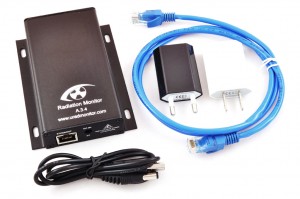
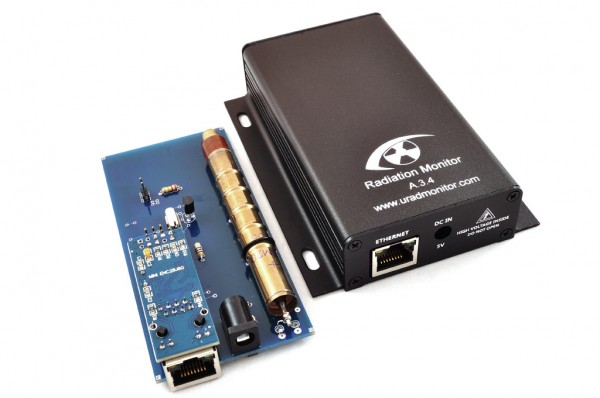
uRADMonitors are shipped globally to create a new Global Radiation Monitoring Network at http://www.uradmonitor.com/

Aquarian Bath and SolarNetOne are joining a new Global Radiation Monitoring Network, and you can too. This network was designed as an alert system for monitoring radiation level spikes. You can see that currently Europe, parts of the United States, Australia are represented. Each point on the map represents a special Geiger counter designed by Radu Motison. In the Orlando area radiation levels are low today, however we are interested particularly in monitoring our area since there was a recent spike in radiation levels in Miami.
Screen shot of map from September 6, 2014

Radu is trained as a software engineer, with a masters in Computer Science from West University of Timisoara.  Electronics started as a hobby during Radu's childhood. Radu started the Global Radiation Monitoring Network to give something useful to the community. The project began with a single monitoring station for his personal use Radu explains. "Then it became clear that having multiple stations across the Globe would provide interesting insight to backgrounradiation fluctuations and possible causes. Also in case of nuclear incidents, the distributed units would be able to pickup any raising trends and sound an alarm for seeking additional information on the event." Radu designed, built and tested his new uRADMonitor with the testing help from beta-testers who are currently on the network map. 

uRadMonitors use the same detector tubes calibrated against a common reference.

I asked Radu how is his network better than existing crowd sourced radiation monitoring networks or government networks. 

It's open, so everyone can see real time, unaltered data. It's using the same detectors, calibrated against a common reference. Thus, the numbers displayed on the portal are easily comparable. It's easy to use, and it only takes one look to see where the "hot" spots are. See for example the unit in the Ceska Cermna: http://www.uradmonitor.com/?open=1200000F that is almost the double of the average readings of the entire network. This is due to naturally occurring thorium and uranium under the soil where this unit is located. And uRADMonitor was able to detect this phenomenon right away. It is probably the first global network of this kind. The data collection is safe as it resides on the server side. The data transmission is protected to a certain degree using a security code.

How easy is it to set up?  Can anyone do it?

It's the simple to set up your uRADMonitor Geiger counter. uRADMonitor must be mounted outside, but not directly in the sunlight. Ideally uRADMonitor should be mounted 1 meter above the ground level. The units are rainproof if mounted with the cables facing down.You will need to connect it to power, using the power adapter included with the unit, and to the home internet router using the included network cable. The device does everything by itself: gets an IP address in the local network, and starts transmitting real time measurements. On the server side the location is approximated and the new unit appears on the map, showing the radiation readings in real time.

uRAD monitors are shipping from Romania at this time, and are available either on Ebay or by emailing Radu.