Saturday, June 28, 2014
Patchouli Spotlight
Patchouli is a popular scented herb in the mint family whose Botanical name is Pogostemon cablin. Patchouli loves warm wet weather and grows well in India, Indonesia, parts of China, and South Florida. We grow it in Central Florida outdoors during the summer and bring it indoors during autumn and winter months. We've found that patchouli is one of the easiest herbs to grow indoors. With the warm rainy summer weather starting in Central Florida, late Spring or early Summer is the perfect time of year to start patchouli from seed. Patchouli is best known for it's use as incense or perfume, but it is also a valuable to use internally as a tea.
In perfumery, patchouli is known as a base note, which is also sometimes called a fixative. The earthy herbaceous scent blends especially well with lighter citrus scents helping them to last longer. In a natural botanical perfume made with patchouli, you will smell it the most strongly as the other scents begin to fade. The patchouli aroma can linger for hours.
Many online herbal references indicate that the patchouli herb should not be taken internally, however it is recommended for use internally in the Traditional Chinese herbology. Patchouli in Chinese is known as "Hou Xiang," which translates "fragrance of the rainy season." This is because during humid summer months it is common for people to burn the incense to dispel or transform damp dirty smells. When one catches a head cold during a rainy summer season, it can be extremely difficult for the sinuses to clear. For this situation, patchouli tea can promote clear sinuses. For adults 5-10 grams of dried patchouli or 10-20 grams of fresh patchouli can be boiled briefly in water for 5-10 minutes. This decoction can be stored in the fridge and a cupful drunk warm 3 times per day. A tincture is also helpful. Pogostemon cablin is functionally interchangeable with Agastache rugosa, which is also known as Huo Xiang in Chinese. Dried Organic patchouli can be found at Mountain Rose Herbs. Patchouli essential oil, and other essential oils, should not be used internally, just the dried or fresh herb.
We use Patchouli essential oil in soaps, perfumes and shampoo bars, both by itself or to enhance the performance of other essential oils.
Thursday, May 29, 2014
The Basics of Hemp Cultivation and Processing
Hemp is an annual crop that can grow in a variety of climate conditions. Although it grows best when the surrounding temperatures are in the 60°F to 80°F range, hemp can handle conditions that are warmer or colder than optimum. In fact, hemp seedlings can even tolerate a little frost. Since hemp can be planted earlier than other crops, such as corn, it produces a sheltering canopy of leaves earlier, which means that weeds get shaded out sooner. This means farmers who raise industrial hemp don’t need herbicides to grow a healthy crop of hemp. The best quality hemp fiber comes from plants that receive at least four months of growing season before a killing frost. For hemp seed production, the growing season needs to extend to 5.5 months, to allow the seeds to fully mature before harvest.
Hemp plants require a good supply of moisture throughout the growing season, but especially during the early growth stage. Once the roots are developed, the plants can tolerate drier conditions, but the best quality hemp is raised in conditions with 20 to 28 inches of rain during the growing season. Drought conditions can force hemp plants to mature early, which means smaller plants.
The hemp plant can grow up to 20 feet tall. The stalk has a woody core, with a layer of bark that contains the long fibers which are found along the length of the stem. Growers have cross bred plants to make varieties of hemp that contain a high stem fiber content while at the same time having very low levels of THC.
To harvest hemp for fiber used in making ropes or fabric, the plants are cut after flowering, but before seeds mature. The next step is retting, which is related to “rotting." Hemp stalks are allowed to decompose a bit to the point where it is easy to remove the bark. The bacteria which break down the stalks require water and which can come from the air in field retting, or the stream or pool used for water retting. Field retting is more environmentally friendly, because when retting is done under water, the bacteria consume the oxygen which is needed by fish in the streams or ponds. In small amounts it is probably not a big issue but in large amount it could make river or lake water oxygen poor. Field retting requires careful monitoring by farmers to ensure that separation of the fibers occurs without too much deterioration from excess moisture. Weather conditions during retting and baling effect the quality of the fiber. Without retting, the fibers tend to break into shorter pieces that are unusable for woven cloth. After retting, the dried hemp stalks are ready for further processing.
Hemp photo by Zela.
Tuesday, May 27, 2014
How is Hemp different than Marijuana? Uses for Hemp Fibers and Seeds
![]() |
| Hemp Linen therapy pillow |
Uses for the Hemp Plant
What makes hemp a valuable crop is its multitude of uses. Worldwide, hemp is used in paper, insulation, animal bedding, carpeting and home textiles and furnishings. Auto industry giants like BMW and Mercedes-Benz use hemp in the manufacture of dash boards and door panels. Hemp Crete is a promising building material, which may someday be used to 3D print houses. And these are just a few of the uses to which the hemp plant is being used as an industrial asset. Aquarian Bath uses two hemp materials in our products, hemp fabric and hemp seed oil.
Fabric
![]() |
| New Hemp-Organic Cotton Washcloths by Aquarian Bath |
Hemp Seeds and Hemp Seed Oil
Traditional Chinese medicine suggests a decoction of the unhulled whole nut/seed. Whole seeds are called Huo Ma Ren in Chinese, and are used primarily for alleviating constipation in elderly, constipation in pregnancy and post-partum. The usual dosage is 9-15 grams per day in decoction. Organic hulled hemp seeds can be sprinkled on salads, added to smoothies, or homemade granola bars. Including these hulled seeds in the diet of elderly and post-partum women may help to prevent constipation characterized by dry difficult to pass stools.
Hemp seed oil is made by pressing hemp seeds. Thirty-three percent of the total weight of the hemp seed is essential fatty acid oils, such as linoleic acid, omega-6 (55%) and alpha-linolenic, omega-3 (22%). It also contains an easily digestible complete protein that is gluten free. Hemp seed oil has a nutty flavor and can be used in recipes that don’t require cooking, including salad dressing, condiments and pesto. Hemp seed oil should not be cooked or used for frying foods. Adding hemp seed oil to the diet has been shown to reduce skin itchiness and dryness due to eczema. Hemp seed oil with its high nutritional value is also a great addition to skin care products, since the lipids found in hemp seed easily penetrate and nourish the skin.
Hemp oil must be kept refrigerated in dark, airtight containers. If you want to keep your hemp seed oil for longer lengths of time, store it in your freezer. The key is keeping opened bottles of hemp seed oil cold and in the dark to prevent the oil from oxidizing and becoming rancid. Because of the fragile nature of hemp oil, it must be used in relatively low concentrations in body products together with other oils or ingredients with antioxidant properties.
Now that you know many great uses for hemp, wouldn't you like to see this crop grown in the USA? We would love to support US farmers by purchasing domestic hemp products. If you would too, please sign this petition at moveon.org which calls to amend the Controlled Substances Act to exclude industrial hemp from the definition of "marihuana."
Friday, May 23, 2014
Victory! DEA returns 250+ Pounds of Hemp Seed to Kentucky Agriculture
In February 2014, Kentucky announced that it would have five pilot programs at higher learning institutions across the state this spring to research hemp production. As part of the program, the state imported 250 pounds of hemp seed, which was impounded by the Drug Enforcement Agency (DEA). On Wednesday, May 14, The Agricultural Department for the state of Kentucky filed a lawsuit against the DEA, the U.S. Customs and Border Patrol and the Federal Justice Department to gain access to their imported seeds. The seeds were just released and will be will be planted as soon as next week after the long memorial day weekend. Other states, such as Tennessee have voted to raise hemp and the governor signed the bill into law on May 14th. On May 20, Agricultural Secretary Tom Vilsack announced at a press conference in Denver that he is working out details with Attorney General Eric Holder to settle the conflict between the Farm Bill’s hemp production statement and federal drug laws.
As a result of the federal prohibition on domestic production, today all hemp products used in the United States are imported from other countries, such as China, Canada, Russia, South Korea and parts of Europe. Hopefully this is about to change. The most recent U.S. Farm Bill allows for states that have passed laws making industrial hemp production legal, to begin researching hemp as a potential crop. While the Farm Bill does not make it federally legal to raise hemp in the U.S., it does protect researchers and farmers from federal government crackdown in the following 12 states that have already passed laws restoring hemp production legality: Kentucky, California, Oregon, North Dakota, Montana, Colorado, Indiana, Nebraska, Utah, Vermont, Maine and West Virginia.
Just because hemp cultivation has been illegal in the memory of a generation or two, does not mean it has always been this way. Hemp has been a part of the United States from colonial times until the production of any Cannabis plant was restricted in this country in 1937 by the Marijuana Tax Act. The first hemp in what is now the U.S. arrived in 1645 with the Puritans in Massachusetts. Cultivation of hemp quickly spread to other colonies, where it became an important crop for cordage, rope and sailcloth used in sailing vessels, as well as other applications. George Washington even grew hemp on his plantation around 1765 to replace tobacco cultivation, because it was such a valued crop. Hemp was grown extensively in the US from 1940-1960 in part because of the need for rope and fabric during World War II. At one point hemp production reached 68 thousand tons. By the 1970s, the raising of any member of the Cannabis family, including hemp, was completely outlawed.
Aquarian Bath supports growing this valuable crop in the U.S.A. legally. We use Canadian hemp oil for many of our shampoo bars and soaps. We use Chinese hemp textiles to make our flaxseed therapy pillows and new washcloths. We hope to someday soon to make products with USA hemp oil and USA cloth. We will be sharing more on Hemp cultivation and industrial uses for this plant in upcoming blog posts, so please subscribe to our blog if this topic interests you.
Monday, May 19, 2014
'Wood' you like to win this Giveaway? Prizes from The Wooden Bee and Aquarian Bath
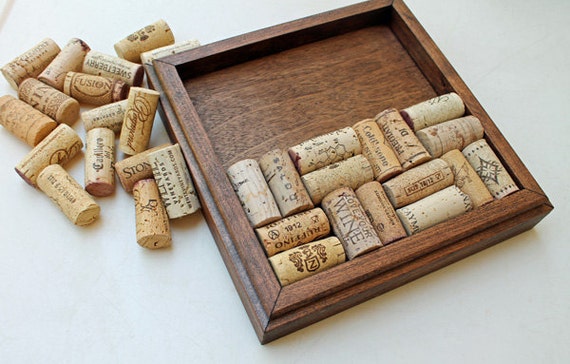
One of my favorite Etsy sites is The Wooden Bee. This shop is run by our friend Bee of Volusia County whose family is in the construction business. Bee and her husband reclaim the best quality wood pieces that would otherwise end up in the landfill for making her unique home decor pieces. Some of the popular items in her shop include her wine cork supplies for craft making and her wine cork trivet kits. The Wooden Bee blog will give you a lot of great ideas about crafts that you can do with used wine corks. Our daughter made cute cork reindeer with Bee's wine corks a couple of years ago.
![]() |
| Popular item from The Wooden Bee: Wine Corks and Trivet making kit |
Bee has offered one of her wall hangers and 2 champagne cork key chains, as a prize to one of our blog followers for this giveaway. The set is shown in the first image and the image below.
And just for fun we are also including one of our woody soaps for the winner of Bee's prize. The winner of the wall hanger and key chains will also receive one of our Patchouli Cedarwood hard hand soaps.
This contest is open to US residents age 18 an over. Please enter using the Rafflecopter Giveaway below.
a Rafflecopter giveaway
Subscribe to:
Posts (Atom)