Showing posts with label usa. Show all posts

Saturday, September 6, 2014

Join the Global Radiation Monitoring Network

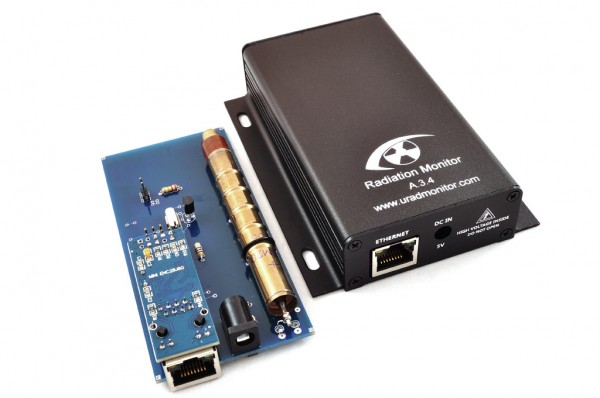
uRADMonitors are shipped globally to create a new Global Radiation Monitoring Network at http://www.uradmonitor.com/

Aquarian Bath and SolarNetOne are joining a new Global Radiation Monitoring Network, and you can too. This network was designed as an alert system for monitoring radiation level spikes. You can see that currently Europe, parts of the United States, Australia are represented. Each point on the map represents a special Geiger counter designed by Radu Motison. In the Orlando area radiation levels are low today, however we are interested particularly in monitoring our area since there was a recent spike in radiation levels in Miami.
Screen shot of map from September 6, 2014

Radu is trained as a software engineer, with a masters in Computer Science from West University of Timisoara.  Electronics started as a hobby during Radu's childhood. Radu started the Global Radiation Monitoring Network to give something useful to the community. The project began with a single monitoring station for his personal use Radu explains. "Then it became clear that having multiple stations across the Globe would provide interesting insight to backgrounradiation fluctuations and possible causes. Also in case of nuclear incidents, the distributed units would be able to pickup any raising trends and sound an alarm for seeking additional information on the event." Radu designed, built and tested his new uRADMonitor with the testing help from beta-testers who are currently on the network map. 

uRadMonitors use the same detector tubes calibrated against a common reference.

I asked Radu how is his network better than existing crowd sourced radiation monitoring networks or government networks. 

It's open, so everyone can see real time, unaltered data. It's using the same detectors, calibrated against a common reference. Thus, the numbers displayed on the portal are easily comparable. It's easy to use, and it only takes one look to see where the "hot" spots are. See for example the unit in the Ceska Cermna: http://www.uradmonitor.com/?open=1200000F that is almost the double of the average readings of the entire network. This is due to naturally occurring thorium and uranium under the soil where this unit is located. And uRADMonitor was able to detect this phenomenon right away. It is probably the first global network of this kind. The data collection is safe as it resides on the server side. The data transmission is protected to a certain degree using a security code.

How easy is it to set up?  Can anyone do it?

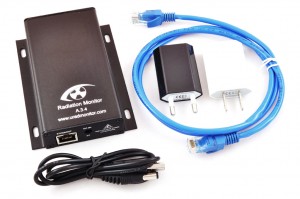
It's the simple to set up your uRADMonitor Geiger counter. uRADMonitor must be mounted outside, but not directly in the sunlight. Ideally uRADMonitor should be mounted 1 meter above the ground level. The units are rainproof if mounted with the cables facing down.You will need to connect it to power, using the power adapter included with the unit, and to the home internet router using the included network cable. The device does everything by itself: gets an IP address in the local network, and starts transmitting real time measurements. On the server side the location is approximated and the new unit appears on the map, showing the radiation readings in real time.

uRAD monitors are shipping from Romania at this time, and are available either on Ebay or by emailing Radu.  


Friday, May 23, 2014

Victory! DEA returns 250+ Pounds of Hemp Seed to Kentucky Agriculture


In February 2014, Kentucky announced that it would have five pilot programs at higher learning institutions across the state this spring to research hemp production. As part of the program, the state imported 250 pounds of hemp seed, which was impounded by the Drug Enforcement Agency (DEA). On Wednesday, May 14, The Agricultural Department for the state of Kentucky filed a lawsuit against the DEA, the U.S. Customs and Border Patrol and the Federal Justice Department to gain access to their imported seeds. The seeds were just released and will be will be planted as soon as next week after the long memorial day weekend.  Other states, such as Tennessee have voted to raise hemp and the governor signed the bill into law on May 14th. On May 20, Agricultural Secretary Tom Vilsack announced at a press conference in Denver that he is working out details with Attorney General Eric Holder to settle the conflict between the Farm Bill’s hemp production statement and federal drug laws. 

As a result of the federal prohibition on domestic production, today all hemp products used in the United States are imported from other countries, such as China, Canada, Russia, South Korea and parts of Europe. Hopefully this is about to change. The most recent U.S. Farm Bill allows for states that have passed laws making industrial hemp production legal, to begin researching hemp as a potential crop. While the Farm Bill does not make it federally legal to raise hemp in the U.S., it does protect researchers and farmers from federal government crackdown in the following 12 states that have already passed laws restoring hemp production legality: Kentucky, California, Oregon, North Dakota, Montana, Colorado, Indiana, Nebraska, Utah, Vermont, Maine and West Virginia.

Just because hemp cultivation has been illegal in the memory of a generation or two, does not mean it has always been this way. Hemp has been a part of the United States from colonial times until the production of any Cannabis plant was restricted in this country in 1937 by the Marijuana Tax Act. The first hemp in what is now the U.S. arrived in 1645 with the Puritans in Massachusetts. Cultivation of hemp quickly spread to other colonies, where it became an important crop for cordage, rope and sailcloth used in sailing vessels, as well as other applications. George Washington even grew hemp on his plantation around 1765 to replace tobacco cultivation, because it was such a valued crop. Hemp was grown extensively in the US from 1940-1960 in part because of the need for rope and fabric during World War II. At one point hemp production reached 68 thousand tons. By the 1970s, the raising of any member of the Cannabis family, including hemp, was completely outlawed.

Aquarian Bath supports growing this valuable crop in the U.S.A. legally. We use Canadian hemp oil for many of our shampoo bars and soaps. We use Chinese hemp textiles to make our flaxseed therapy pillows and new washcloths.  We hope to someday soon to make products with USA hemp oil and USA cloth.  We will be sharing more on Hemp cultivation and industrial uses for this plant in upcoming blog posts, so please subscribe to our blog if this topic interests you.